Imacura · Nazara
The city, as its people see it.
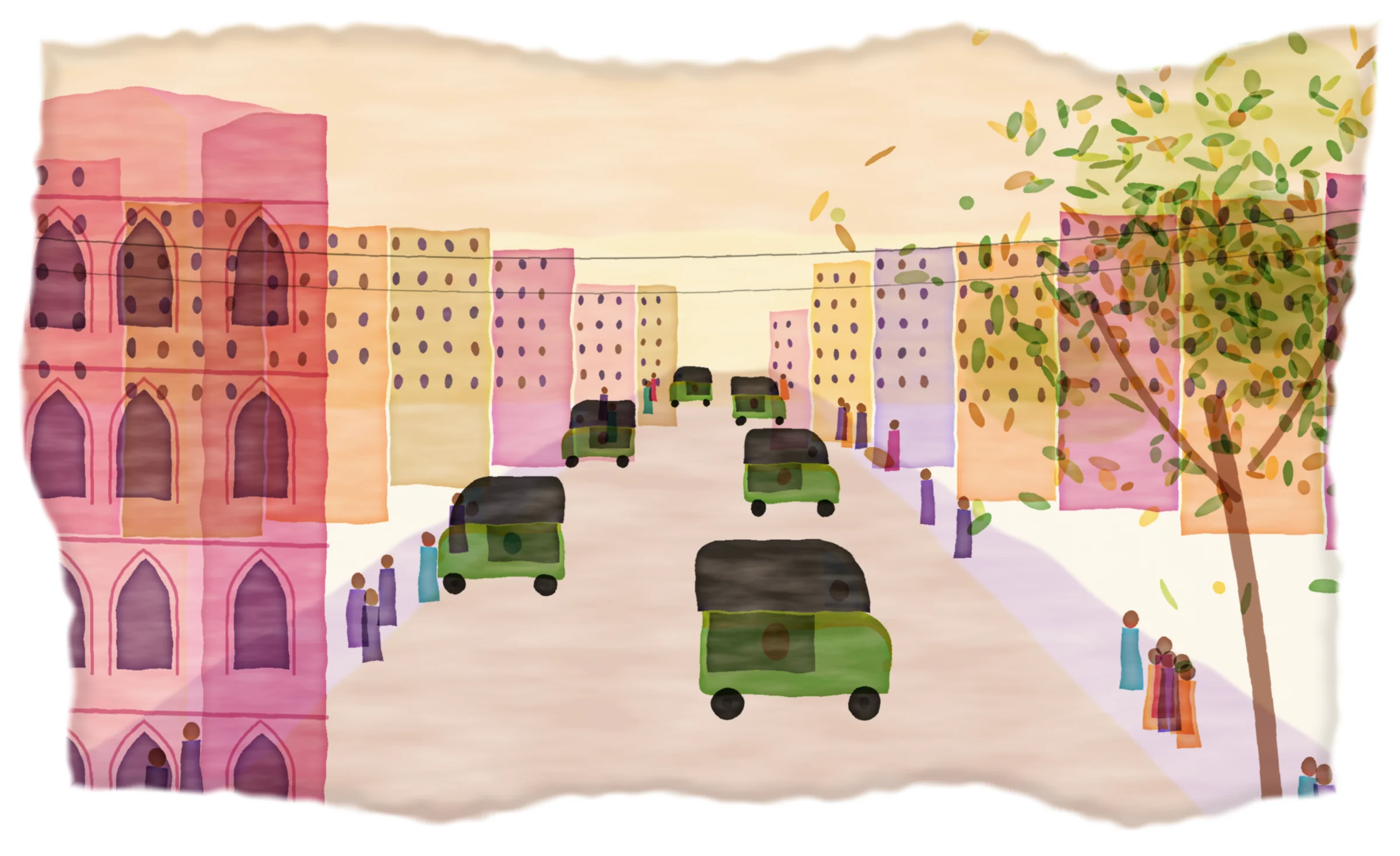
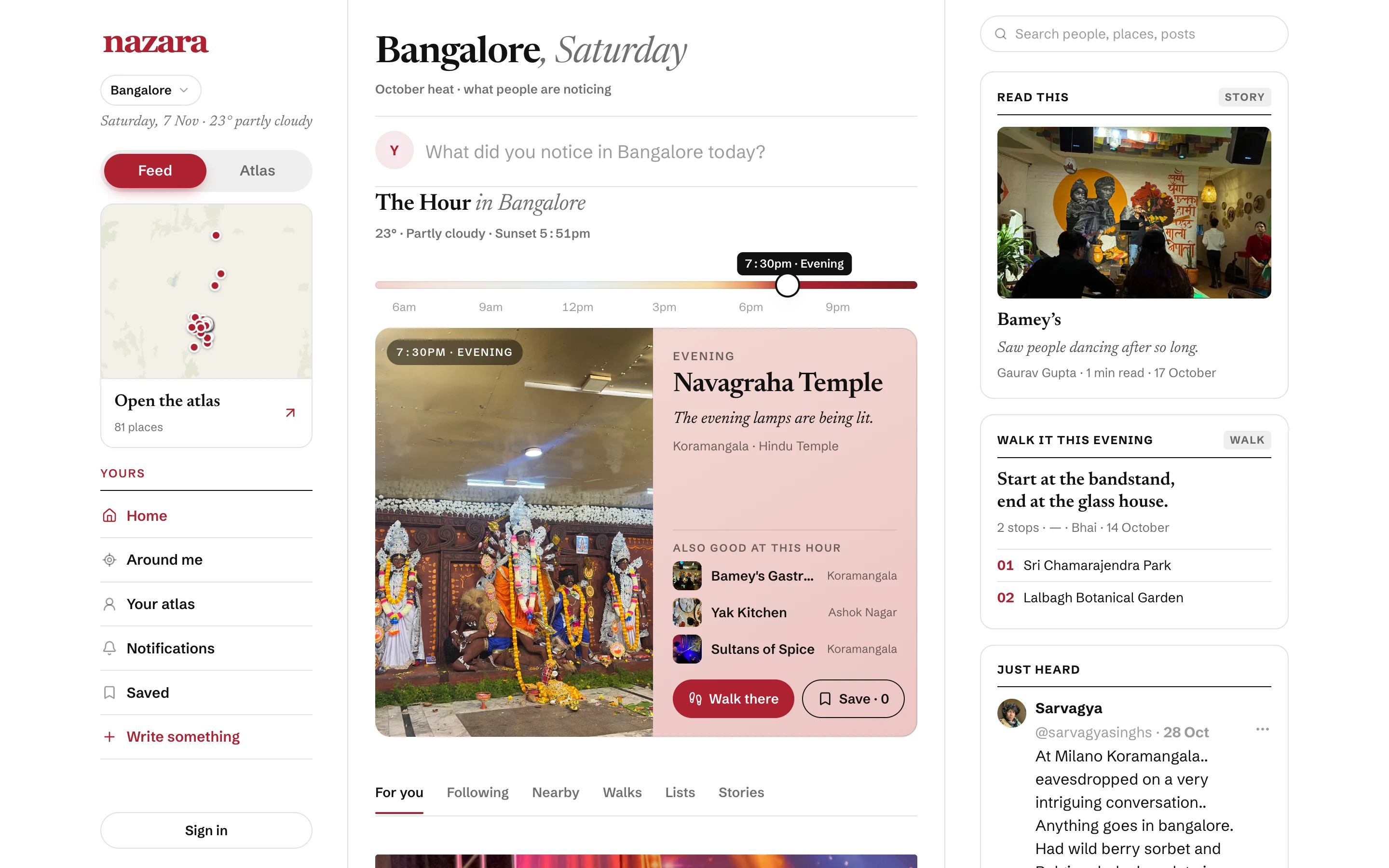
Nazara is a people's atlas. You post what you noticed somewhere, a photo, a few lines, a voice note, and it lands on a shared map of the city for the next person who passes by. On the web and in its own app.
- Status
- Live
- Platform
- Web and its own app
- Ratings
- None, on purpose
- Languages
- Whatever you think in
Why it exists
A place matters because someone can tell you why.
Nazara means a view: the thing you stop to look at. Most apps for finding places speak the same language of stars, price brackets and opening hours. None of them can tell you why a ghat, a promenade or a chai stall is worth the detour. The people who go there can.
So Nazara has no ratings. You post what you noticed: the circus on the last night of its season, the pandal that felt like Bengal for an evening, the chilla worth ordering again. Each post is tied to the place, it shows up on the atlas, and the next person who walks past finds a story instead of a score.
People write in whatever language they think in. A Hindi poem from the airport's smoking zone sits next to a brunch review and a voice note recorded in an ice-cream shop. That mix is what a city actually sounds like, and Nazara is built to hold it.
It works anywhere: the first post from a new city puts that city on the map. Most of it so far is Bangalore and Mumbai, written by a small group of people, and that's fine. A city with a point of view is worth more than an empty directory of everywhere.
Inside Nazara
how it works
1.0 · The Hour
What's good at this hour.
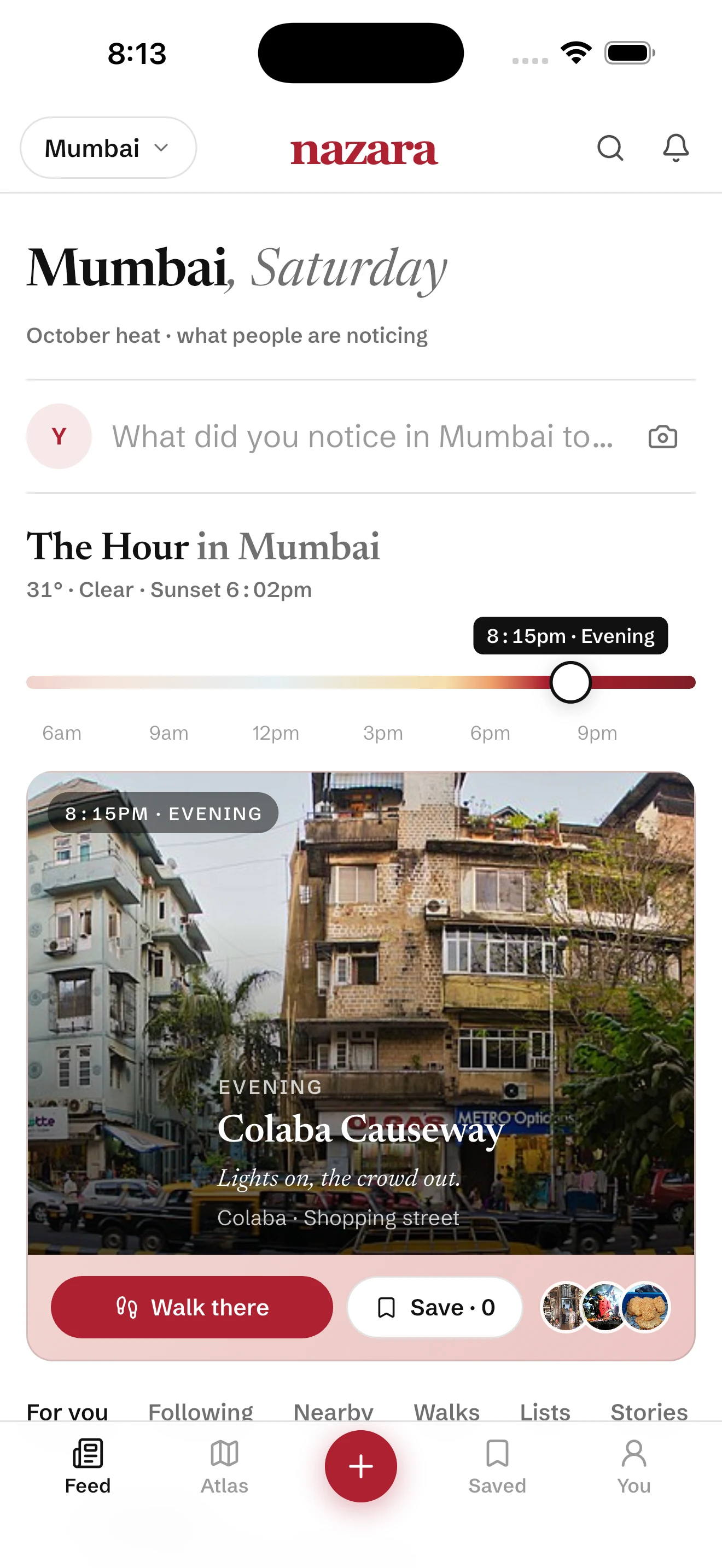
The feed opens on The Hour. Drag across the day, from six in the morning to late at night, and Nazara picks a place that's at its best right then, with the weather and the time of sunset beside it.
At a quarter past eight on a Mumbai evening it sends you to Colaba Causeway: lights on, the crowd out. One tap to walk there, one to save it for later.
2.0 · Moments
Post what you noticed, where you noticed it.
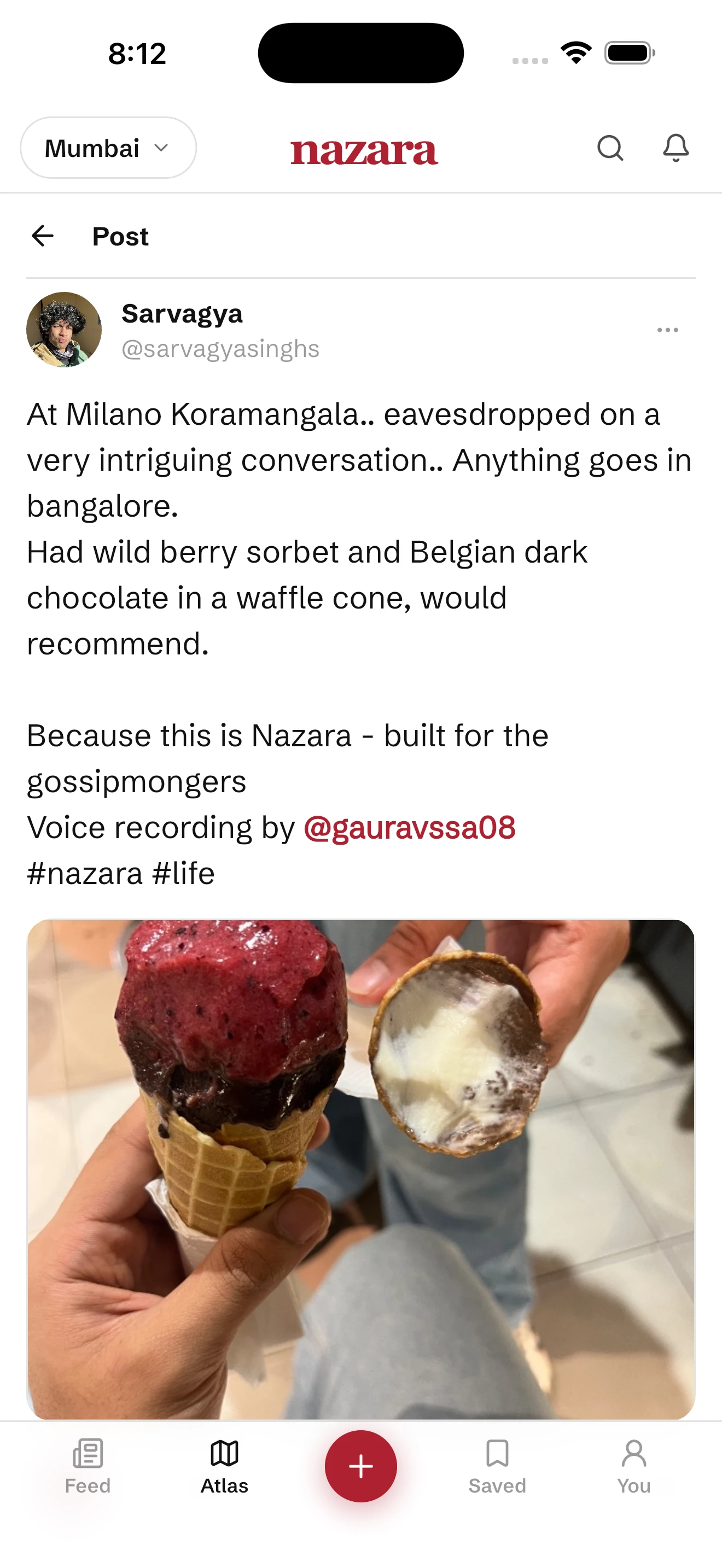
A moment is the smallest thing you can post: a photo or a few, some words, a voice recording if the place is better heard than seen. Tag the friends you were with, add a hashtag or five.
Every moment is pinned to a real place, so it never gets lost in a timeline. Open a place and you get everything people have said about it, newest first.
3.0 · The atlas
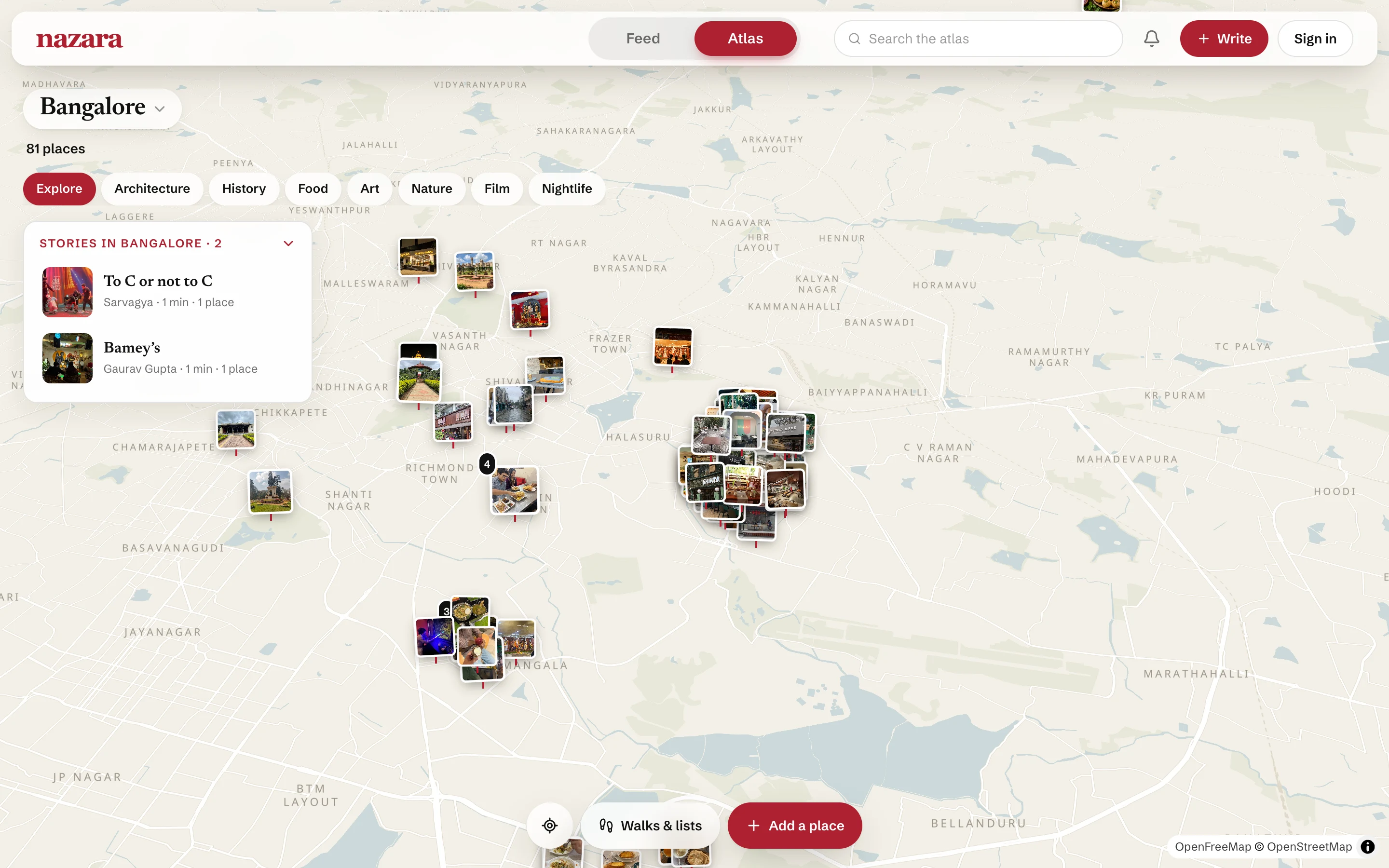
The whole city, as photographs.
Everything people post lands on the atlas, shown as the photos they took, pinned where they took them. Filter by architecture, history, food, art, nature, film or nightlife, or open the stories written about the part of town you're looking at.
Your friends' posts glow on the map for a day, so you can see what they've found today. Your own posts build a footprint, every place you've been across every city, on one map.
4.0 · Stories
For when a few lines aren't enough.
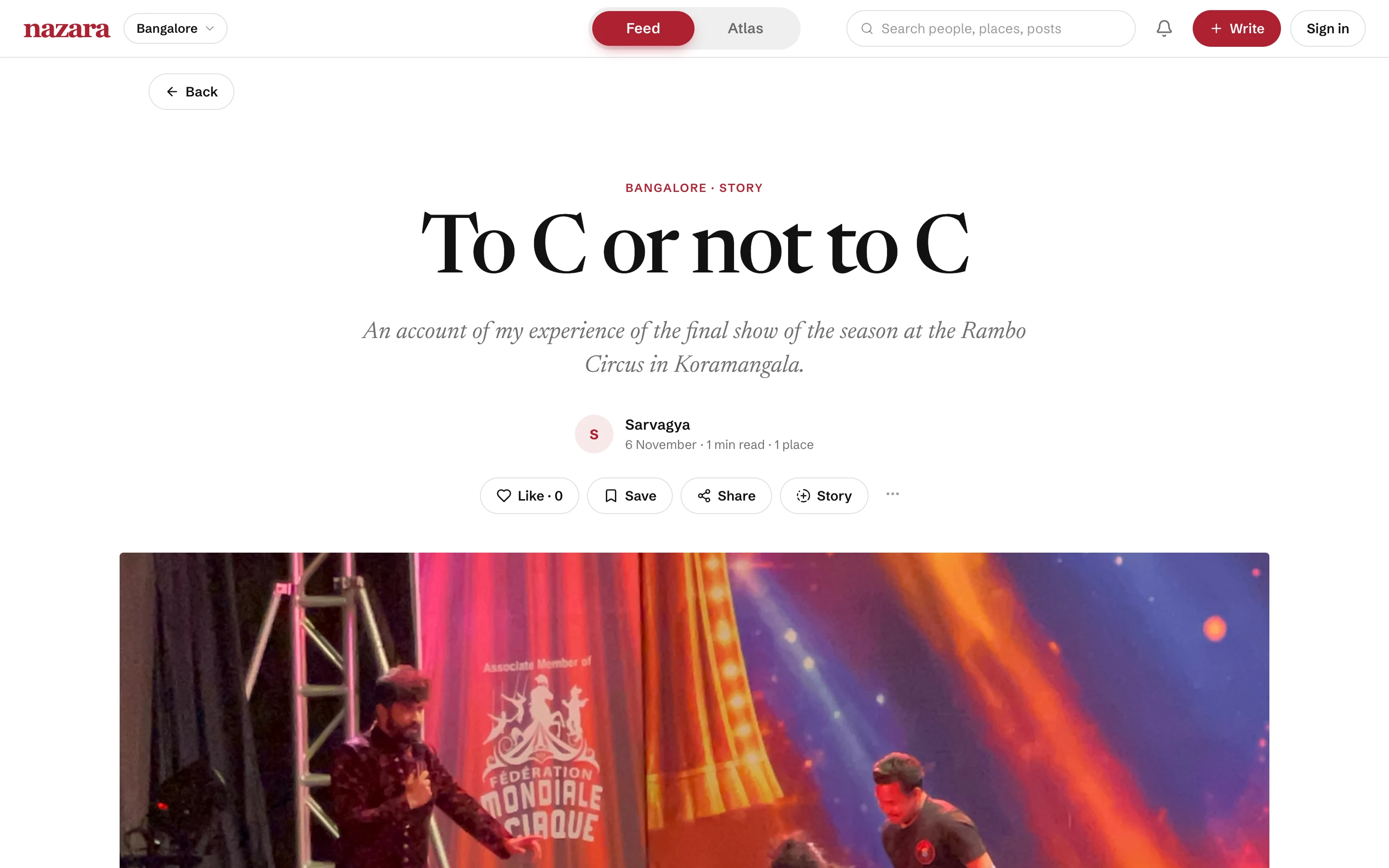
Write the long version: a title, a line beneath it, photos, and the places you mention tagged in the margin, so a reader can open each one on the atlas while they read.
Any story can become a card for your Instagram story in one tap, with the title and photo laid out properly.
5.0 · Profiles
Where I'd take you.
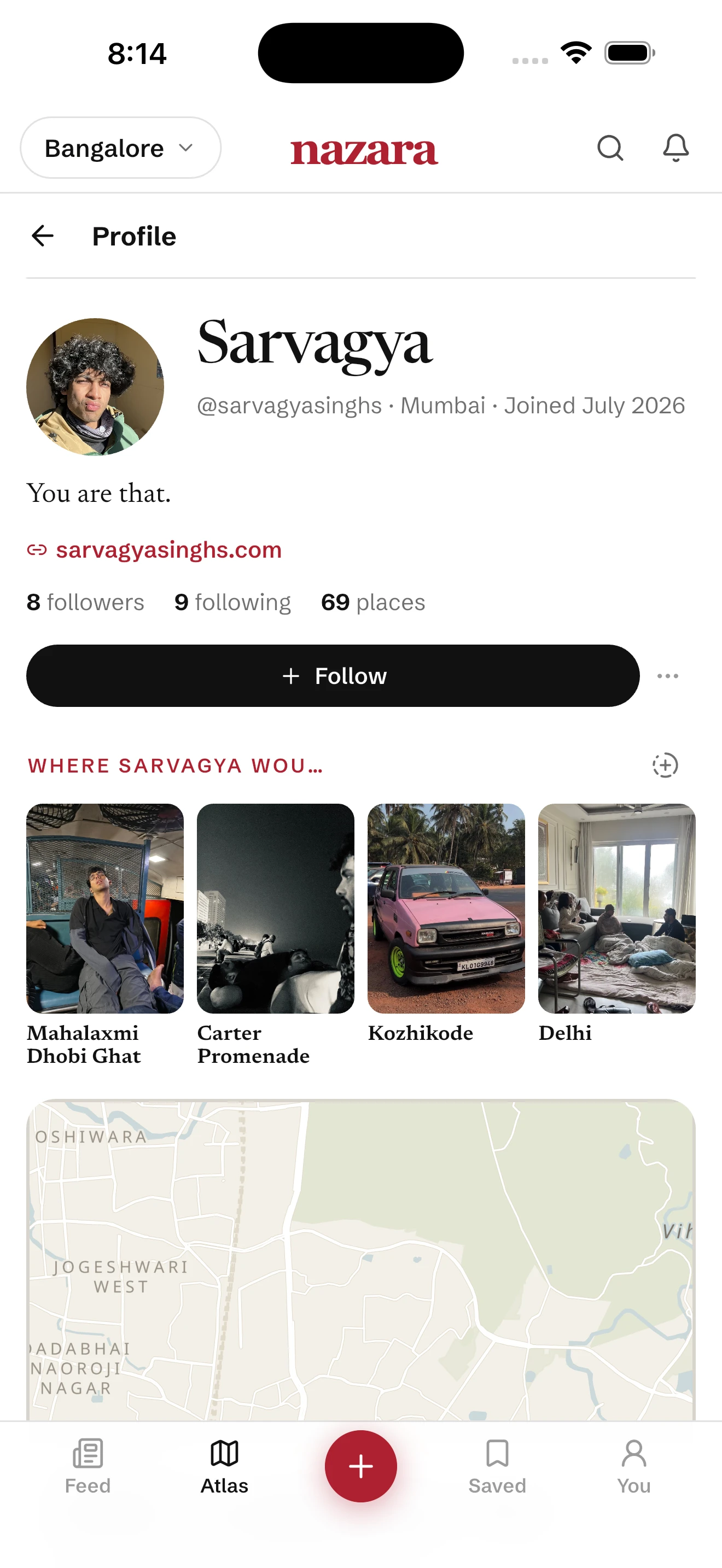
Every profile opens with four places its owner would take you, each with their own photo and a line about why. It's the quickest way to know whether you'll trust someone's taste.
Below that, everything they've posted, as a grid or a stream, and the map of where they've been. Follow the people whose eye you trust.
And the small things
that make it feel right
Walks
A route with a point of view: an opening note, numbered stops, and why you should go in that order.
Lists
Quick collections with a one-line premise, made to be passed on to friends.
A saved board
Save places and moments to a private board, group them, and turn a group into a public list when it's ready.
Around me
Everything people have posted near where you're standing.
Voice notes
Record what a place sounds like and post it with the photo.
Credited photos
A new landmark with no photo yet gets one from Wikimedia Commons, credited, until someone posts their own.
The Hour. Drag through the day.
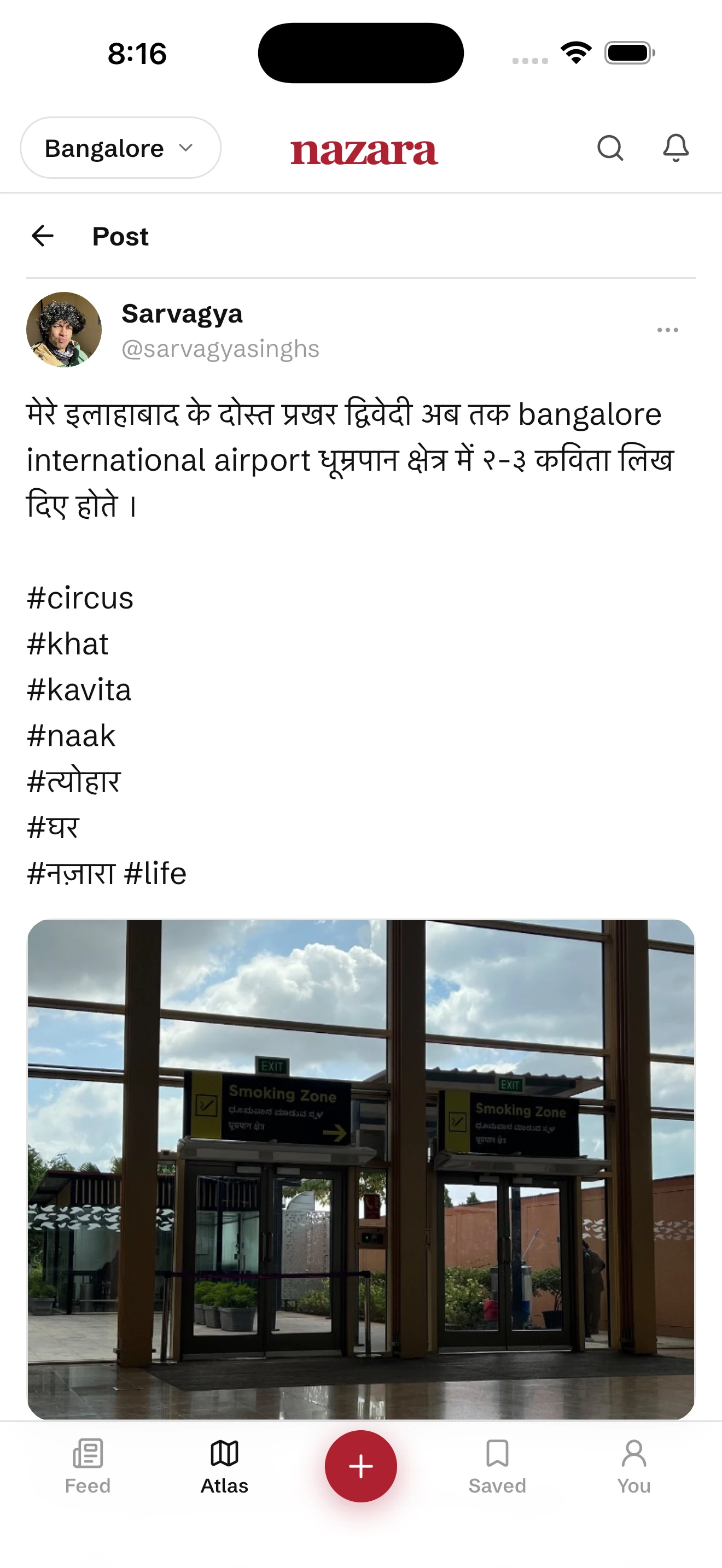
Written in Hindi, from the airport.
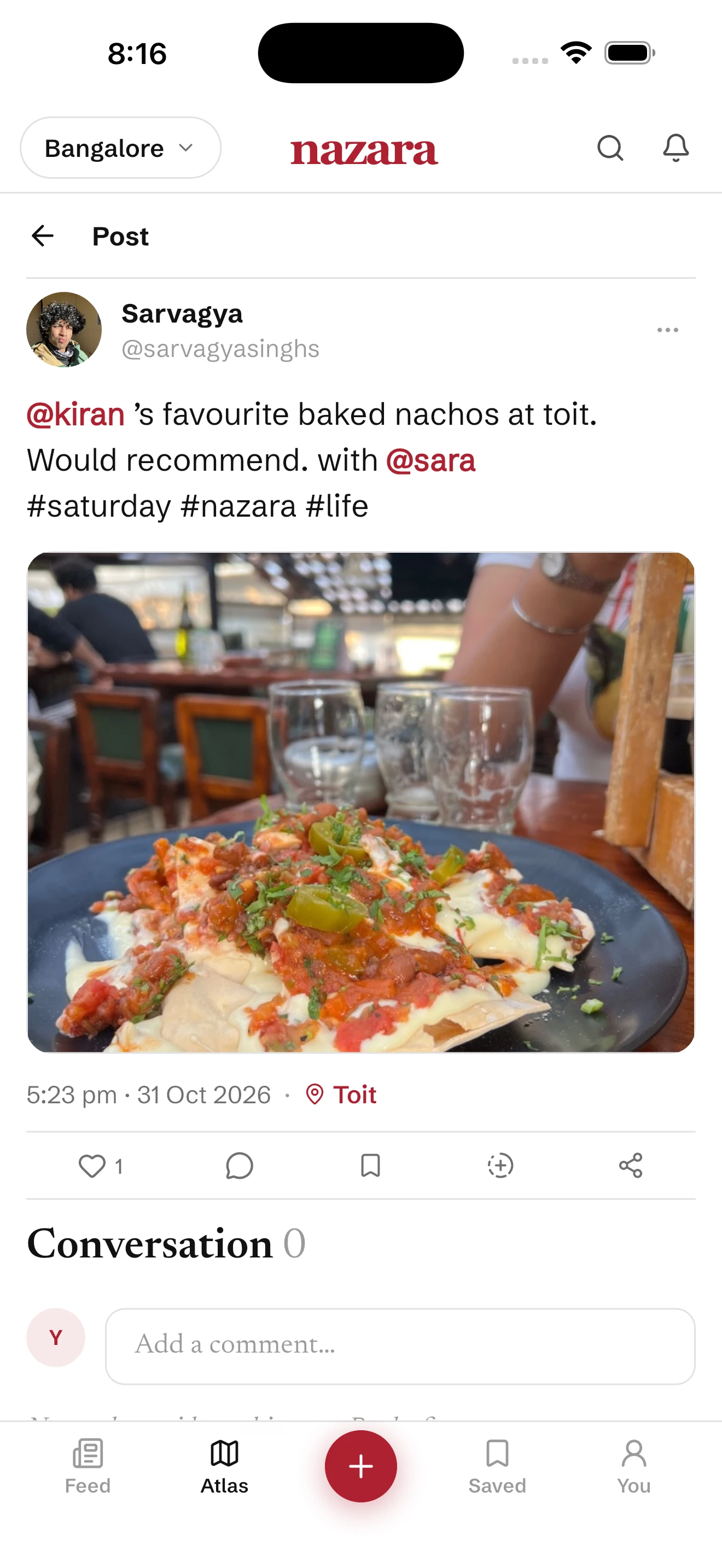
A friend's favourite, tagged.
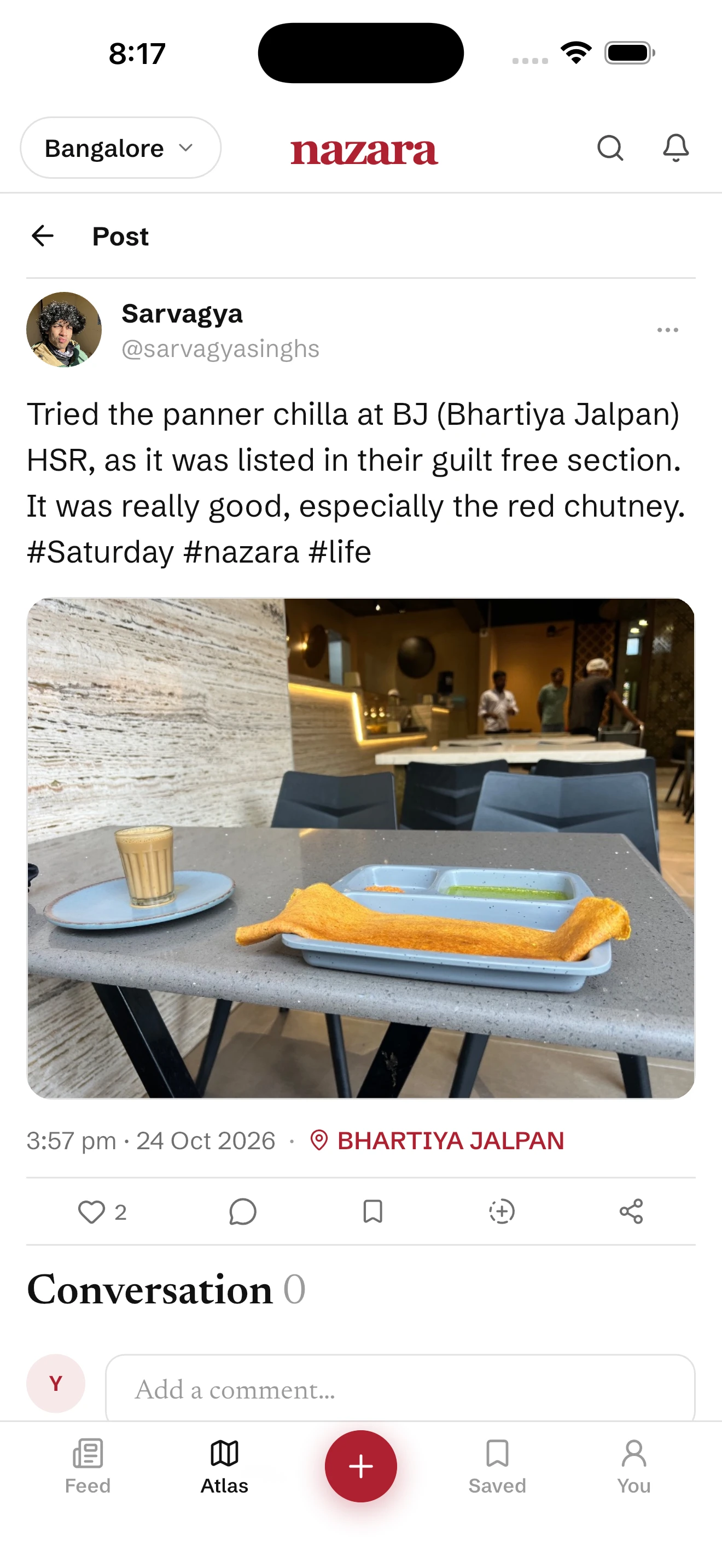
Tied to the place it happened.
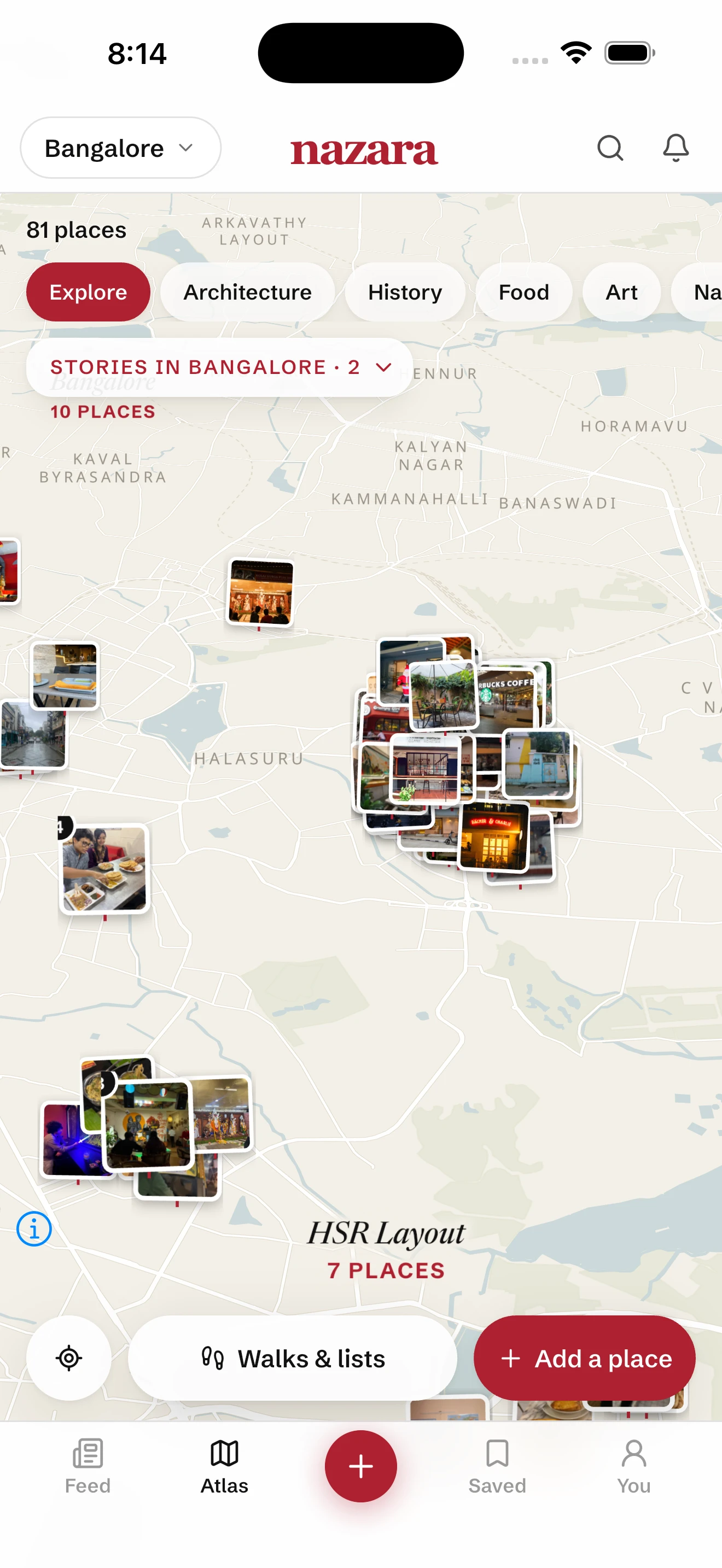
The atlas, as photographs.
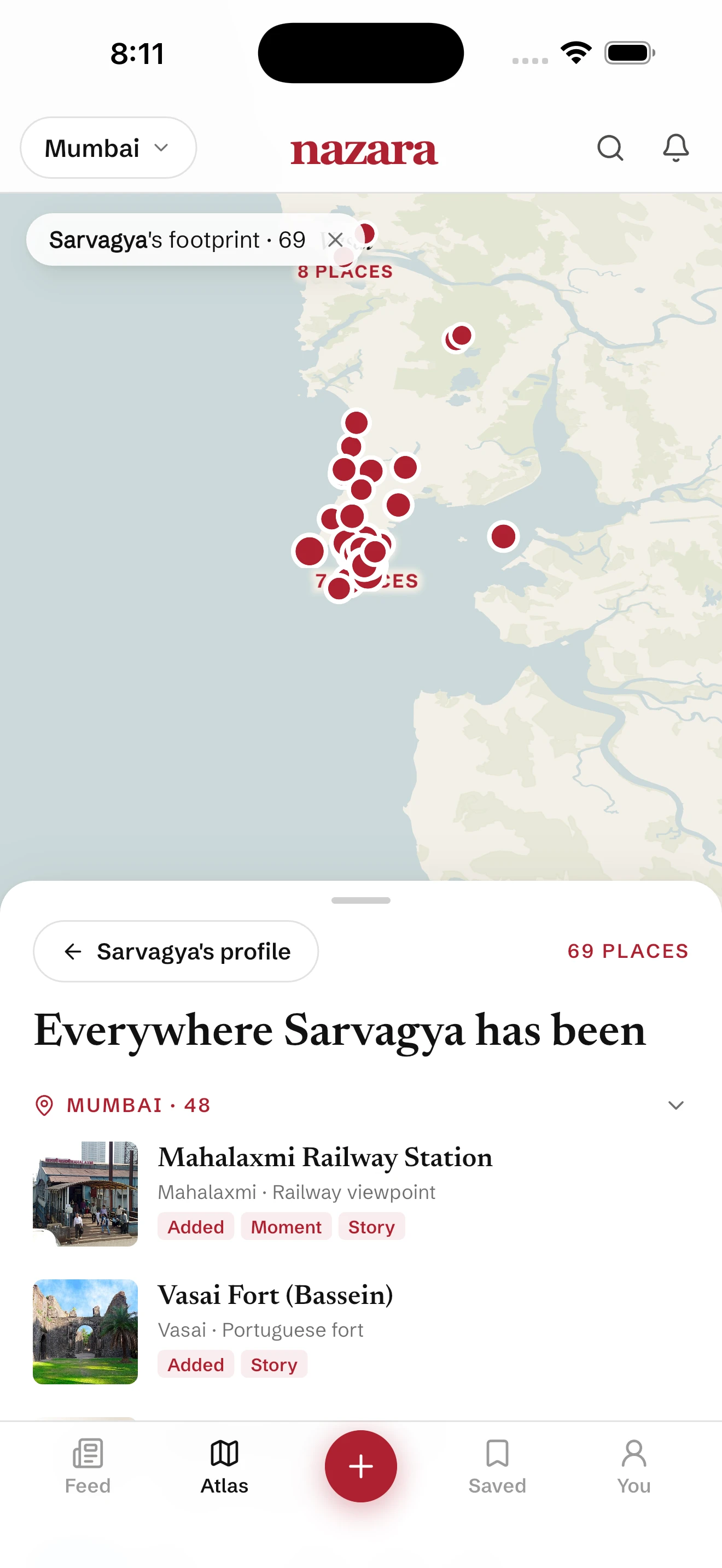
A footprint of everywhere you've been.
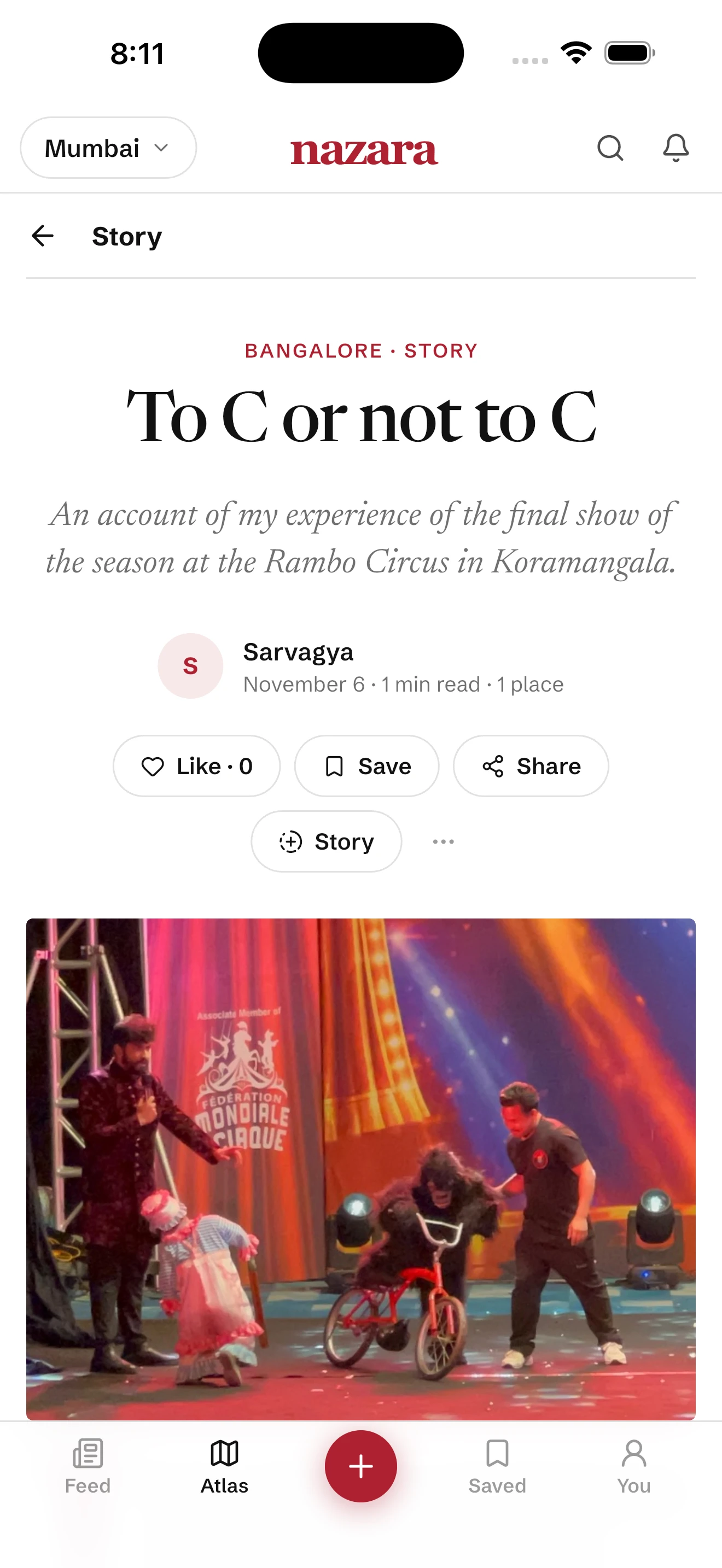
A story, with its places.
Where I'd take you.
How we built it
a short case study
Designed, engineered and run in-house by Imacura. The same people build client products.
Next.js · React · TypeScript · MapLibre GL · Supabase · PostGIS · Sentry
1.0
Proximity search in the database
PostGIS answers 'around me' and 'nearby' directly in Postgres, fast at city scale.
2.0
Security enforced by the database
Row-level security policies, not app code, decide who can read and write what.
3.0
Tested against the real backend
An automated suite runs real users through the full social loop, follows, posts and saves included, before every release.
4.0
Made to be shared
Stories and 'Where I'd take you' each render their own card, sized for Instagram stories.